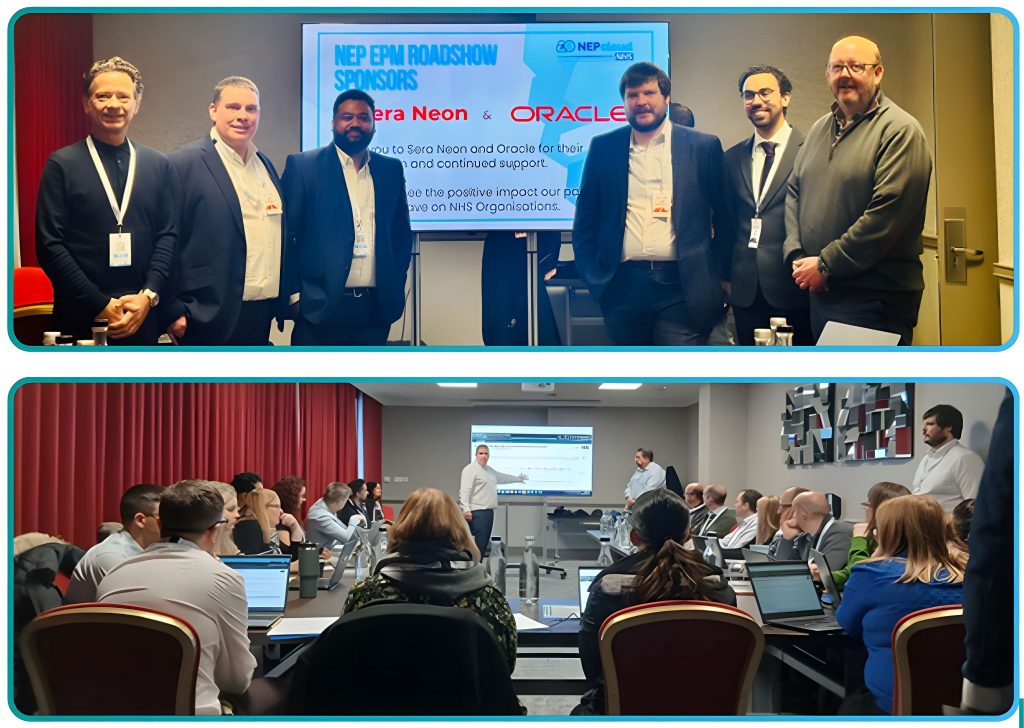
NEP is a global technology and production services provider supporting live events, broadcast, and media solutions worldwide. With complex financial and operational processes, NEP relies on Oracle Cloud EPM to manage planning, forecasting, and reporting across multiple business units. The company engaged Sera Neon to review and optimise its EPM environment to ensure performance, scalability, and alignment with business objectives.
The Challenge
NEP’s Oracle EPM system was experiencing inefficiencies that impacted performance, user experience, and overall operational effectiveness. Key issues included redundant business rules, slow data processing, and inconsistencies in integration and reporting. These challenges created delays in financial planning and decision-making processes.
An initial review revealed gaps in system configuration, data management, and process design, all of which limited the system’s ability to deliver timely and accurate insights. The business sought not only immediate remediation but also a long-term strategy for continuous optimisation and reduced dependency on third-party tools.
What did Sera Neon do?
Sera Neon executed a structured, four-phase engagement — Foundation, Remediation, Stabilisation, and Continuous Improvement — to systematically identify, resolve, and optimise NEP’s Oracle EPM environment.
Foundation Phase
Conducted a rapid assessment to identify critical performance bottlenecks and inefficiencies.
Performed a detailed review of functional processes, technical configurations, and data integrity.
Identified nine key enhancement areas to drive system optimisation and improve user experience.
Remediation Phase
Prioritised and implemented six critical enhancements to stabilise the environment.
Streamlined 180 business rules down to 30 active, optimised rules — significantly reducing complexity and improving performance.
Executed a structured remediation plan to refine configurations, reporting structures, and integrations.
Migrated data and metadata integrations from a third-party tool to native EPM capabilities, improving performance, reducing dependencies, and enhancing data consistency.
Stabilisation Phase
Provided post-remediation support to ensure smooth operations and sustainable improvements.
Delivered knowledge transfer sessions and best practice training to internal teams, empowering them to manage and adapt the system independently.
Initiated the migration of NEP’s Pay Model from Excel to EPM, improving data accuracy and streamlining financial processes.
Continuous Improvement (Ongoing)
Established a framework for periodic analysis and ongoing system optimisation.
Conducted regular performance reviews to maintain scalability, stability, and alignment with NEP’s evolving business requirements.
Continued to deliver enhancements, ensuring Oracle EPM remains a strategic enabler of operational excellence.

The Results
- Identified and resolved nine key areas of system inefficiency.
- Improved system performance and data integrity through configuration and integration optimisation.
- Increased end-user satisfaction through streamlined workflows and improved responsiveness.
- Empowered NEP’s internal teams through knowledge transfer and process ownership.
- Reduced business rules from 180 to 30, enhancing speed and manageability.
- Reduced reliance on third-party tools by migrating integrations to native EPM solutions.
- Enhanced reporting accuracy and overall planning efficiency.
- Established a foundation for continuous improvement and long-term scalability.